
Natural Sciences · Engineering · Mathematics · Economics · AI & ML
International Programme for High School Students
An academically rigorous programme for exceptional 15-18 years old high school students globally at the University of Cambridge, UK.

Welcome to Cambridge
Founded in 1209, the University of Cambridge is the second oldest university in the English speaking world. Among our alumni and affiliates we have 126 Nobel Prize Laureates, 47 Heads of State, and 217 Olympic medallists.
The University of Cambridge is a global university. Our students come from 142 countries. Our international work spans global regions and disciplines, and we welcomes talented students from around the world. The University of Cambridge sits at the heart of one of the world’s largest technology clusters, and has a global reputation for innovation. Gravity. The jet engine. DNA. New treatments for cancer. Cambridge thinking has been making a difference for 800 years.
Cambridge University Nanjing Centre of Technology and Innovation is the first research institute established by University of Cambridge outside of UK, and the only overseas innovation centre officially branded with the University of Cambridge name to date. Established and supported by the University and the Nanjing Municipal Government, it receives supports from all Schools, Departments, and Faculties of the University.

About the programme
A selective and academically rigorous programme for exceptional 15-18 years old high school students. Adopting small group teaching, each academic track will enrol approx. 15 outstanding students.
Students will experience Cambridge’s renowned collegiate system just like our undergraduates, by staying at Peterhouse, the oldest college, or Trinity Hall where Hawking studied, with a diverse global community of professors and students.
This programme simulates Cambridge undergraduate studies. You can
select from Natural Sciences, Engineering, Economics, or Mathematics track, complemented by studies in AI. You can also apply for the newly launched AI and Machine Learning track. In addition, you will complete a super-curriculars capstone project supervised by Cambridge faculty – the kind of deep, curious academic exploration top universities worldwide love to see in future students.
The experience extends beyond two weeks. You will join a diverse global youth alumni circle, maintaining lasting connections with Cambridge, professors, and classmates, while participating in future events. The excellent research team will participate in a free, six-month online advanced research programme supervised by Cambridge faculty after the summer school and receive recommendation letters.
Programme structure and dates
This is a three-stage learning process. Prior to the two-week residential programme at Cambridge, students will participate in an online preparatory course, equipping them with foundational knowledge and research methodologies. Excellent research group will be invited to participate in a free six-month online advanced enrichment programme after the summer school, surprised by Cambridge faculty to complete a research paper.

Online Preparatory Course
1 July – 18 July 2027 (2 weeks)
Total 10 hours
recorded sessions
flexible learning pace
pre research training

On-campus at Cambridge UK
19 July – 1 August 2027 (2 weeks)
Total 50 hours
select one academic track
as the main subject +
supervised capstone project

Online Advanced Programme
November 2027 – April 2028 (6 months)
Total 24 hours
2 hours per session
(biweekly on weekends)
live interactive sessions
Meet Your Cambridge Faculty
You will be taught by the world-leading Cambridge University faculty, with the standards of a Cambridge education. The academic faculty shown below provides an example of the partial expertise involved in the programme, but is subject to change. Any update will ensure the programme maintains its high quality and relevance.
*2026 faculty examples (partial)

Simon Godsill
Head of Information Engineering Division, Professor of Information Engineering, Department of Engineering, University of Cambridge; Professorial Fellow of Corpus Christi College, Cambridge.

Geoffrey Ward
Professor in English, Deputy Vice-Chancellor (2015-21), University of Cambridge;
Honorary Fellow, Principal (2013-21), Homerton College, Cambridge; Acting Director (2017-19), Fitzwilliam Museum Cambridge; Life Fellow, Royal Society of the Arts.
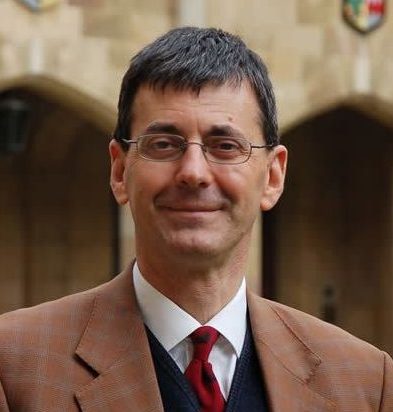
Max Beber
Senior Tutor (2008-2026), Governing Body Fellow, and Director of Studies in Economics, Sidney Sussex College, Cambridge; Lecturer, Faculty of Economics, University of Cambridge.
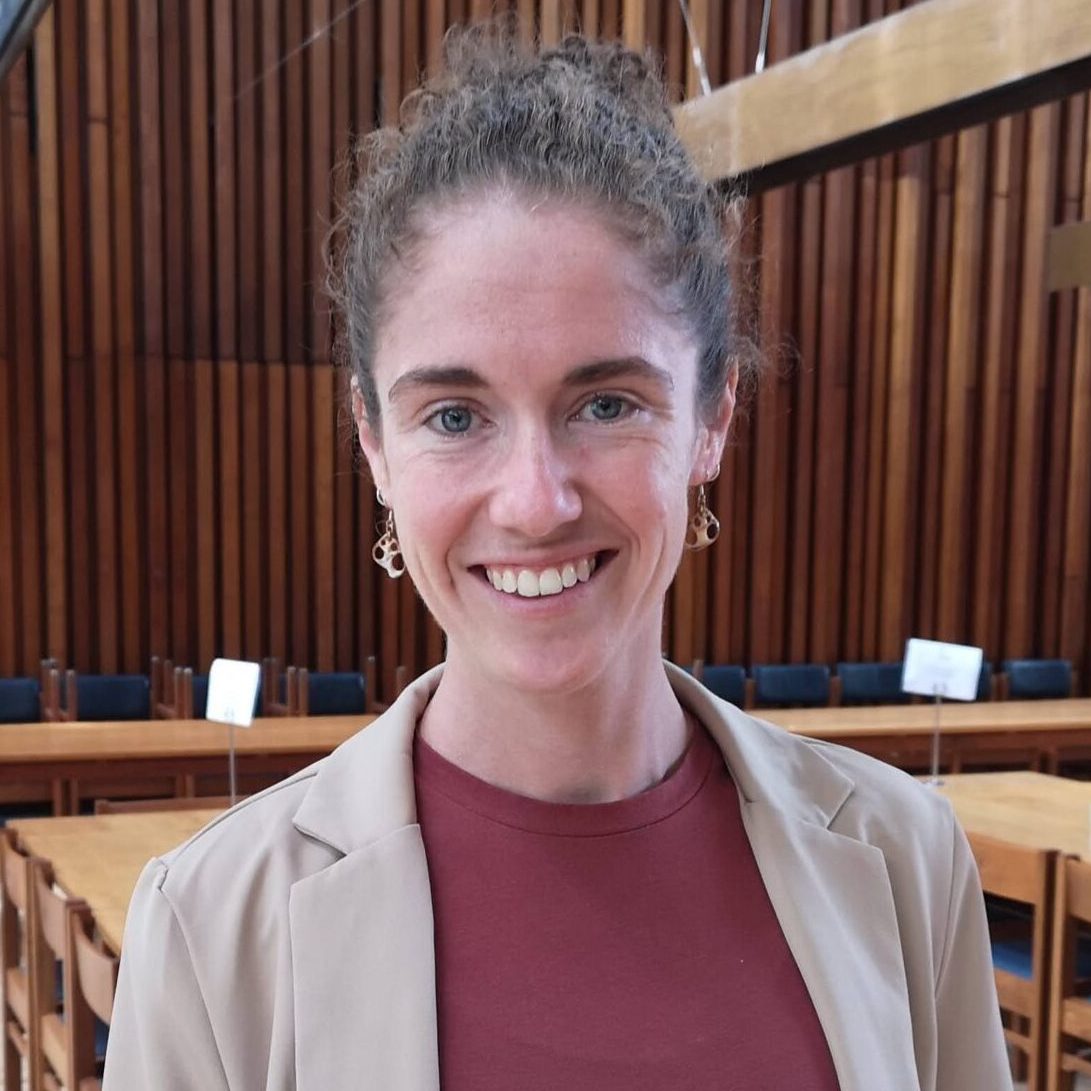
Rachel Thorley
CORE Fellow, Assistant Professor of Engineering, Deputy President SCR, Churchil College, University of Cambridge, responsible for community, outreach and recruitment activities in engineering

Eloy de Lera Acedo
Head of the Radio Astronomy and Cosmology Group, Professor of Radio Astronomy, Cavendish Laboratory, Physics Department, University of Cambridge; Fellow, Lecturer in Physics, Selwyn College, Cambridge.

Bartomeu Monserrat
Professor of Materials Physics and Computational Material Science, Department of Materials Science & Metallurgy, University of Cambridge; Fellow of Robinson College, Cambridge

Jasmin Jahić
Bye-Fellow, Director of Studies in Computer Science, Queens’ College, Cambridge; Research Associate, Department of Computer Science and Technology, University of Cambridge.

Adrian Fisher
Professor of Electrochemistry, Department of Chemical Engineering and Biotechnology, University of Cambridge.
Heads the Electrochemical and Micro Engineering group.

Simulate Cambridge undergraduate curricula
Designed to simulate Cambridge undergraduate curricula, this programme allows you to learn from, and build connections with, Cambridge faculty in your chosen field, thereby deepening your subject understanding and experience.
Furthermore, super-curricular based research projects offer you a genuine experience of Cambridge’s supervision system. The research project you complete is an excellent way to demonstrate your academic drive and capability in global university applications.
Choose your academic track
This programme simulates Cambridge undergraduate studies. You can select from Natural Sciences, Engineering, Economics, or Mathematics track, complemented by study in AI. You can also apply for the newly launched AI and Machine Learning track.

Track 1: Natural Sciences,
Simulating Cambridge undergraduate Natural Sciences, the course will guide you to explore fields such as Physics, Chemistry, and Biology, helping you understand the interconnections of natural science concepts and disciplines. You will become familiar with scientific research methods, and integrate tools from different disciplines to address specific problems. This course provides both an chance to experience interdisciplinary thinking and a foundation for future specialisation.
Topics: Physics, Chemistry, Biology, Materials Science, Mathematical Methods
Teaching Methods: Small-group seminars, masterclass, supervision
Taught by: Cambridge University faculty in Natural Sciences
Student Intake: Approx. 15 students

Track 3: Mathematics
Simulating Cambridge undergraduate Mathematics, this course offer a transition from high school mathematics to university-level mathematical logic, proof thinking, and creative research. It will explore foundational topics in advanced maths, such as algebra systems, analysis, probability theory, and mathematical methods, establishing a solid foundation for future study in Mathematics and related fields.
Topics: Study of Algebra Systems, Analysis, Probability Theory, Mathematical Methods, Newtonian Mechanics and Special Relativity
Teaching Methods: Small-group seminars, masterclass, supervision
Taught by: Cambridge University faculty in Mathematics
Student Intake: Approx. 15 students

Track 5: AI and Machine Learning
Simulating Cambridge undergraduate studies, this course introduces the core principles and applications of AI and Machine Learning. Students will learn how AI transforms sciences, businesses, and societies while exploring its statistical, and computational methods. The course will cultivate students’ ability to use AI tools to analyse real-world problems, generate creative ideas, and design innovative solutions. It will foster interdisciplinary thinking and provide a foundation for AI applications across different disciplines and real-world challenges.
Topics: AI Foundations, Neural Networks and Deep Learning, Data Science and Statistics, Interdisciplinary Innovation and Applications, AI Ethics and Societal Impact
Teaching Methods: Small-group seminars, masterclass, supervision
Taught by: Cambridge University faculty in AI & Machine Learning
Student Intake: Approx. 15 students

Track 2: Engineering
Simulating Cambridge undergraduate Engineering, the course will explore the core principles and practices of engineering education. The course will introduce the analysis, design, and computational skills that underpin modern engineering practices, cultivate creativity and problem-solving abilities, and apply them to real-world problems. This will help you lay the foundation for future specialisations.
Topics: Mechanical Engineering, Structural & Materials Engineering, Electrical & Information Engineering, Mathematical Methods, Structural & Product Design
Teaching Methods: Small-group seminars, masterclass, supervision
Taught by: Cambridge University faculty in Engineering
Student Intake: Approx. 15 students

Track 4: Economics
Simulating Cambridge undergraduate Economics, the course establishes a foundation in core, theoretical, and applied economics. It integrates ideas and methods of multiple disciplines, such as maths, statistics, history, sociology, and political science, to enhance the study of economics. It will explore both micro and macro economicsprinciples, introduce mathematical and statistical techniques in economics through quantitative methods, and engage in case studies, fostering an understanding of the thought processes and methodologies in economics.
Topics: Microeconomics, Macroeconomics, Quantitative Methods in Economics, Political and Social Aspects of Economics, Economic History
Teaching Methods: Small-group seminars, masterclass, supervision
Taught by: Cambridge University faculty in Economics
Student Intake: Approx. 15 students
Authentic Cambridge college experience
You will experience Cambridge’s renowned collegiate system just like our undergraduate. You will stay and study at Peterhouse, the oldest college, or Trinity Hall where Hawking studied, with a diverse global community of professors and students.

Accommodation and Dining: You will reside in warm and secure single accommodation of the college, dine in its classical dining hall, and study in the very rooms where many of great minds studied. You will experience the life of a Cambridge undergraduate.
Application process
This is a selective and academically rigorous programme for exceptional 15-18 years old high school students. Each academic track will enrol less than 15 outstanding students. Practice this as a mini university application. Applicants are reviewed on a rolling basis. Early submission is encouraged.
01
Online Application
In addition to basic information, the form will include the following questions:
• Why do you want to choose this academic track?
• What skills do you hope to develop in the programme?
• What experiences and skills do you have to support your participation?
02
Supporting Documents
(Optional) Submit the following optional supporting documents to support your application:
• A previous English written sample of any topic, within 2000 words, such as an essay, or a report, etc.
• Proof of language proficiency (if applicable)
03
Interview
Applications are reviewed on a rolling basis.
Shortlisted applicants will be invited for interview.
Please do not hesitate to contact us via globalyouth@cunjc.org.cn if you have not heard from us in the following 5 working days after your submission.
04
Decision
Applicants will receive the admissions decision in 2-weeks after submitting online application.
If admitted, applicants will receive guidance for registration and payment process to confirm their offer and participation.
Visa application guidance and a supporting letter will be provided, if you need a visa to come to the UK.

Admissions Criteria
Admissions will be based on multiple factors, including: application questions, interview performance, subject understanding, English proficiency, etc.
Language Requirements:
If English is not one of your native languages, or if the primary language of instruction at your school is not English, it is recommended that applicants achieve a C1 level on the Common European Framework of Reference for Languages (CEFR). This standard can usually be met through the following qualifications:
IELTS: Overall score of 7
English language test result is not a mandatory supporting document. If you don’t meet the English language requirement waiver condition, and don’t have any English test result, your English proficiency will be assessed during the interview if you are shortlisted.
Fees
Duration: refer to programme strucute & dates
Age: 15-18 years old students
Places: approx.15 / track
Fees: £7,800 / ¥69,800 (includes all 3 stages of the programme)
Includes: tuition fee of all 3 stages of the programme, single accommodation, 3 meals per day, two formal dinners, excursions, course materials, return transfers from London airports.
Not include: international flights, visa application fees (if required), travel and health insurance, and personal expenses.
Visa (if required): Visa application guidance and a supporting letter will be provided, if you need a visa to come to the UK.
Contact
Please enquire globalyouth@cunjc.org.cn for any question or inform us about your submission to track and accelerate your application process.

Welcome to Cambridge
Empower your university applications and long-term development. The core experience lies in the heart of Cambridge.

No.23, Rongyue Road
Jiangbei New Area
Nanjing City
Jiangsu Province, PRC
Contact
globalyouth@cunjc.org.cn
Please enquire us for any question or inform us about your submission to track and accelerate your application process.
© Cambridge University Nanjing Centre of Technology and Innovation 2026 all rights reserved.